A violent mid-air explosion
On April 10, 1958, a U.S. Air Force B-47E Stratojet (tail number 52-0470) exploded mid-air during a refueling operation, crashing near the Town of Collins, New York.
The aircraft had departed Lockbourne Air Force Base in Ohio on a routine training flight involving high-stress maneuvers typical of Cold War nuclear-delivery profiles. A KC-97 tanker was orbiting over Lake Erie, waiting to refuel the bomber on a track roughly 12 miles south of the Buffalo–Rochester–Syracuse airway.
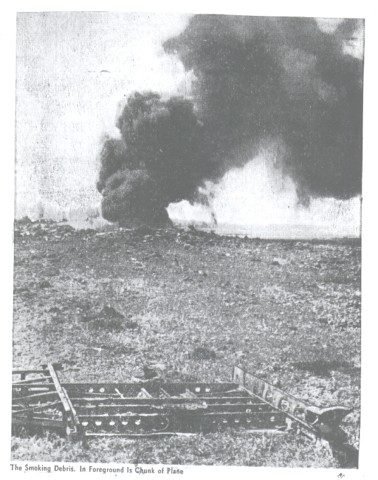
As the B-47 closed on the tanker and the pilot began to report visual contact, the transmission cut off. Moments later, the tanker crew’s boom operator confirmed what the silence meant: the bomber had exploded directly behind them. Witnesses on the ground reported a bright flash, a thunderous detonation, and falling debris — a large fireball and a smaller one, arcing down toward a farmhouse outside Collins. There were no parachutes.
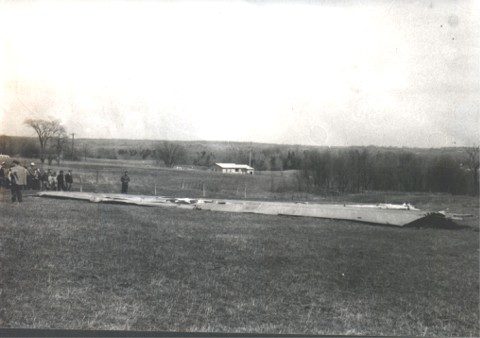
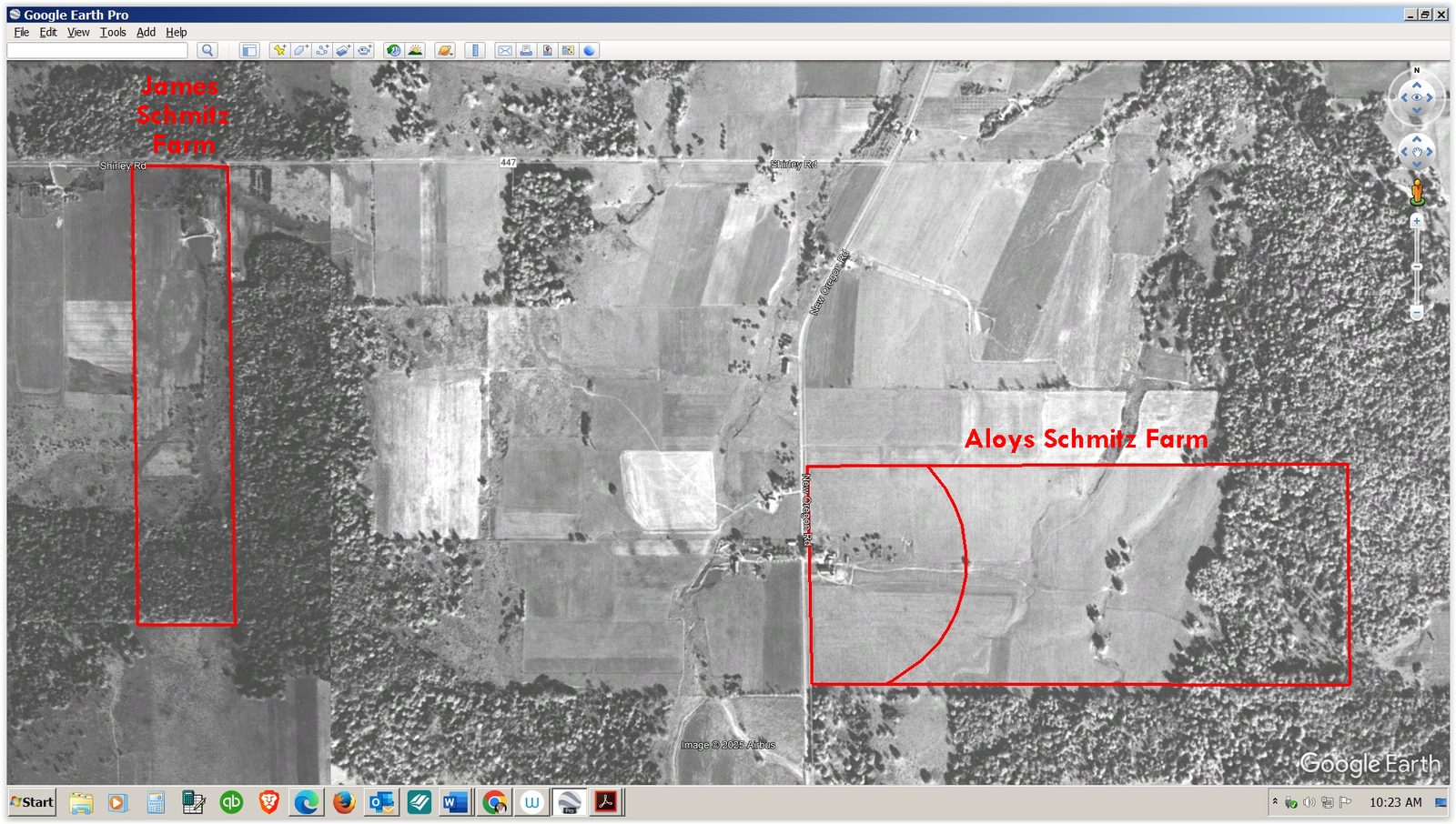
Wreckage was scattered across multiple farm properties in the Collins and North Collins area. The two explosions bracketed a farmhouse and started several brush fires; within fifteen minutes, private planes, a small commercial airliner, and rescue helicopters were circling the scene while fire crews worked to get past stopped highway traffic.
All four crew members were killed
- Lt Col. John Robert Glyer — Pilot
- Maj. Harold L. Kelly — Aircraft Commander
- 1st Lt. Richard “Dick” Tellier — Co-Pilot
- 1st Lt. Albert Gene Moncla — Navigator
Read more about each airman on the Crew Memorial page.
A structural failure, not an accident of chance
The tragedy occurred amid growing concerns over metal fatigue in the aircraft’s wing-mounting bolts — shaped like old-fashioned milk bottles — critical to structural integrity. Investigators found the breakup pattern of 52-0470 matched other B-47 losses attributed to fatigue cracking and overstress failure: a steep banking maneuver placed extreme loads on the wing roots and fuselage frames, the right wing separated first, and the fuselage disintegrated in rapid sequence.
This led directly to “Project Milk Bottle,” a top-secret retrofit program that modified over 1,600 B-47s to prevent catastrophic wing failure fleet-wide. Though never officially confirmed as the cause of this specific crash, historians suspect the Collins accident was among the incidents that prompted the fleet-wide grounding and repair effort described on the Project Milk Bottle page.